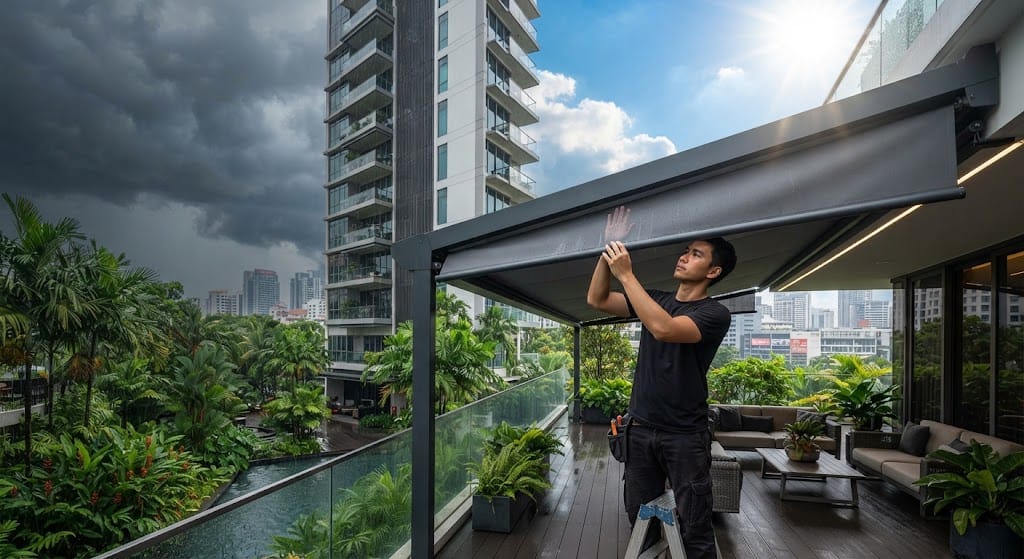
Awnings That Withstand Singapore’s Humidity
October 24, 2024
Glass Canopies vs. Traditional Awnings for Singapore Landed Property Car Porches (2026 Architectural & Cost Guide)
August 10, 2026Advanced Awning Materials for 2026: Canvas, Composite, or Polycarbonate? (Singapore Material Selection Guide)
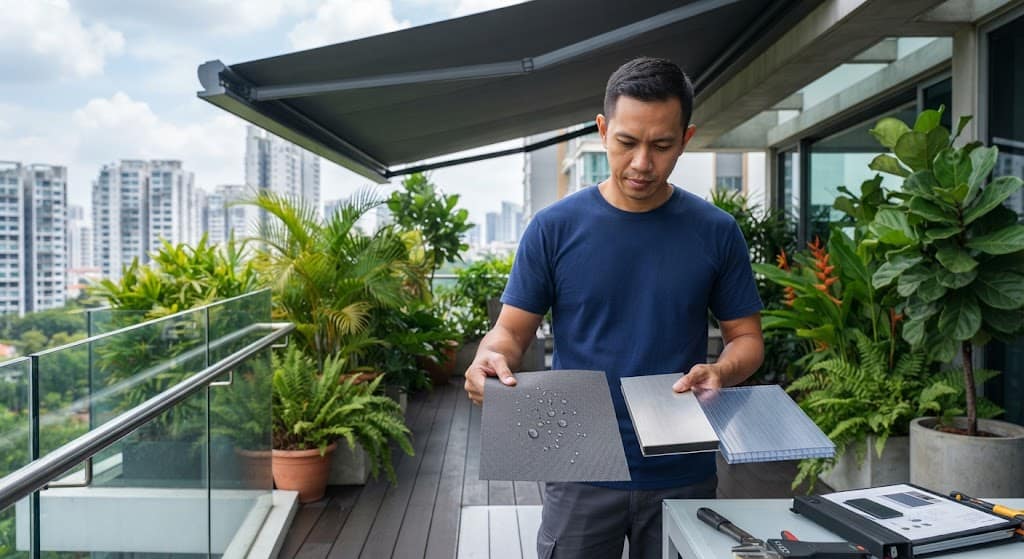
Comparing thermal deflection, UV resistance, and acoustic rain dampening across advanced outdoor awning materials.
Singapore’s tropical climate is notoriously unforgiving on exterior building materials. Positioned right on the equator, our residential balconies, landed car porches, and commercial shopfronts are exposed to an extreme solar environment. The National Environment Agency (NEA) regularly records solar UV index levels peaking in the extreme band (Level 11 to 12), with ambient surface temperatures on unshaded driveways climbing past 60 degrees Celsius. Within hours, this intense baking heat can be interrupted by violent convective squalls dumping over 100mm of rain per hour with dynamic wind gusts exceeding 70 km/h.
For decades, property owners had to settle for basic outdoor materials: cheap piece-dyed polyester canvases that faded and tore within eighteen months, unshielded PVC sheets that became brittle and cracked, or low-grade polycarbonate roofing that turned yellow, milky, and noisy during monsoon rainstorms. When these legacy materials degrade, they not only ruin the visual aesthetic of your home, but also leak rainwater, harbor deep black mold colonies, and fail to provide effective thermal insulation.
Material science has fundamentally transformed outdoor shading. Property owners can now select from advanced 100% solution-dyed acrylic textiles with self-cleaning nanotech coatings, dual-sided UV400 co-extruded polycarbonate sheets, and insulated sandwich composite panels with high-density foam cores. Selecting the right material is no longer just about aesthetics—it is a calculated engineering decision balancing visible light transmission, solar heat gain coefficients (SHGC), hydrostatic water resistance, acoustic decibel dampening, and structural wind tolerances.
Solution-Dyed Acrylic Canvas: The Modern Textile Benchmark
Woven canvas remains the classic aesthetic choice for residential retractable awnings, patio drop shades, and commercial shophouse facades. However, the performance difference between modern high-tech textiles and traditional fabric canvases comes down to polymer chemistry.
Mass-Pigmentation vs. Piece-Dyed Yarn Chemistry
Traditional budget canvases are woven from clear synthetic or cotton fibers and dipped in surface dye baths (piece-dyed). Under Singapore’s intense ultraviolet radiation, UV photons break down the surface chemical dye bonds through photolysis, resulting in rapid fading, color chalking, and fiber embrittlement. Within two years, the fabric loses its tensile strength and tears easily along structural seams.
In contrast, modern performance fabrics utilize 100% solution-dyed acrylic technology. During manufacturing, UV-stabilized color pigments are injected directly into the liquid acrylonitrile polymer solution *before* the liquid is extruded through spinneret dies into solid filaments. The pigment is locked entirely throughout the cross-section of every single fiber, much like a carrot that is orange all the way through, rather than a radish that is only red on the outside. This guarantees superior colorfastness (rated 7 to 8 on the international blue wool scale) and ensures the fabric retains its tensile strength after years of direct afternoon sun.
Self-Cleaning Nanotechnology and Water Impermeability
Modern outdoor textiles are finished with advanced fluoropolymer and titanium dioxide (TiO2) coatings. This creates a microscopic surface texture that produces a high water contact angle (exceeding 140 degrees), producing the classic hydrophobic “lotus effect.” Water droplets roll across the surface instead of flattening out, picking up accumulated road soot, airborne dust, and tree pollen before rolling off the edge.
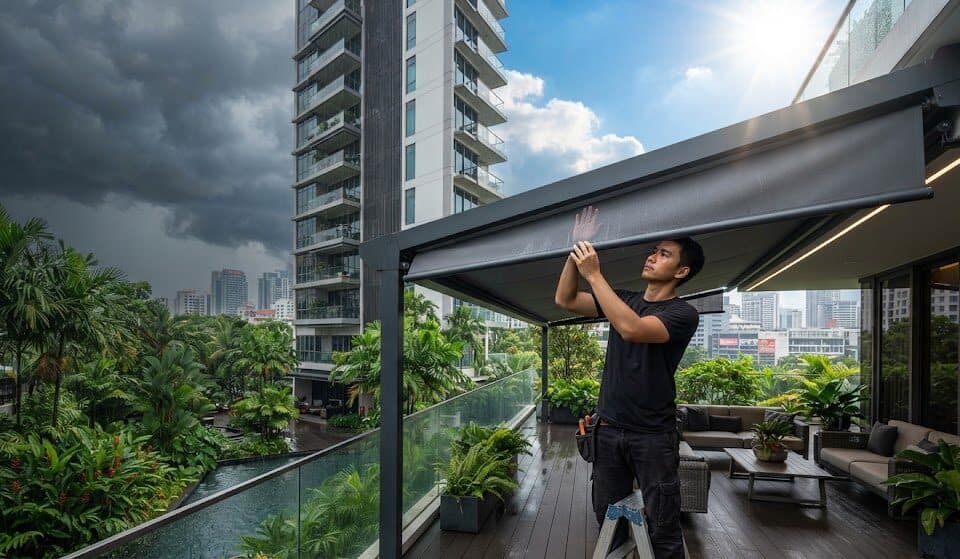
Furthermore, woven acrylic provides natural breathability. While completely blocking rain when installed at a minimum 15-degree slope, the micro-porous weave allows trapped hot air beneath the canopy to rise and escape upward. This eliminates the stifling greenhouse effect common under solid impermeable plastic sheets, making durable canvas awnings the premier choice for homeowners seeking dynamic on-demand shade that keeps outdoor patios cool and breezy.
UV-Stabilized Polycarbonate Systems: Solid vs. Multiwall Sheets
For landed property car porches, covered side walkways, and garden patios requiring fixed, permanent overhead weather protection without losing natural daylight, polycarbonate is one of the most widely specified glazing alternatives. It provides unmatched impact resistance—measuring up to 250 times stronger than standard annealed glass and 30 times stronger than acrylic sheets—making it virtually shatterproof against falling tree branches or high-velocity hail during freak convective storms.
However, successful long-term performance in Singapore depends on sheet geometry and UV protection engineering.
Solid Polycarbonate vs. Multiwall Honeycomb Extrusions
Polycarbonate roofing is engineered into two primary structural formats:
- Solid Flat Polycarbonate Sheets (3mm to 6mm thickness): Delivers the high-end, crystal-clear aesthetic of structural glass at a fraction of the structural dead weight (weighing only 3.6 to 7.2 kg/m² compared to 30+ kg/m² for laminated glass). It provides seamless, distortion-free optical transparency while remaining highly impact-resistant.
- Multiwall Cellular Polycarbonate (6mm to 16mm twin-wall or honeycomb): Features internal air channels (flutes) running throughout the profile. These hollow air chambers act as thermal breaks, reducing conductive heat transfer while making the sheet exceptionally rigid and lightweight. Multiwall profiles diffuse harsh direct sunlight into a soft, ambient glow, eliminating harsh glare in outdoor workspaces.
The 2026 Durability Standard: Dual-Sided Co-Extruded UV400 Cap Layers
Raw polycarbonate polymer degrades rapidly when exposed to solar ultraviolet radiation (wavelengths below 400nm), causing polymer chain scission that leads to yellowing, surface hazing, and brittle failure. In the past, budget polycarbonate sheets relied on cheap spray-on UV lacquers that wore away after eighteen months of heavy tropical rainfall.
Modern architectural polycarbonate roofing systems utilize advanced co-extrusion manufacturing. A protective, high-concentration UV400 resin layer (minimum 50 microns thick) is fused molecularly onto both the top and bottom surfaces of the base polycarbonate sheet during extrusion. This protective barrier reflects 99.9% of damaging UV rays, preventing polymer degradation and guaranteeing a 10-to-15-year clear optical lifespan without yellowing or cracking.
| Awning Material Typology | Visible Light Transmittance (VLT) | Solar Heat Rejection (g-tot) | Rain Acoustic Sound Level | Hydrostatic Water Resistance | Structural Dead Load | Installed Cost Range (S$ PSF) |
|---|---|---|---|---|---|---|
| 100% Solution-Dyed Acrylic Canvas | 0% (Opaque) to 5% Shaded Light |
0.10 to 0.15 Blocks up to 90% Heat |
48 – 52 dB Soft Muffled Thud |
1,200mm – 1,800mm H2O (Requires ≥15° Pitch) |
5 – 8 kg/m² (Ultra-light) |
S$30 – S$50 |
| Marine-Grade Composite PVC Vinyl | 0% (Total Blackout) | 0.08 to 0.12 Superior Heat Block |
55 – 60 dB Moderate Thud |
> 2,500mm H2O 100% Impervious |
8 – 12 kg/m² (Medium load) |
S$35 – S$55 |
| Solid Co-Extruded Polycarbonate | 45% (Tinted) to 88% (Clear) High Natural Light |
0.40 to 0.70 Moderate-High Heat |
75 – 85 dB Loud Drum Effect |
Impervious (100% Solid Barrier) |
4 – 7 kg/m² (Lightweight) |
S$32 – S$55 |
| Multiwall Honeycomb Polycarbonate | 30% (Opal) to 65% (Solar Grey) Diffused Glare |
0.30 to 0.45 Thermal Air Break |
68 – 74 dB Moderate Drum |
Impervious (100% Solid Barrier) |
2.5 – 4.5 kg/m² (Ultra-light) |
S$28 – S$45 |
| Insulated Composite Sandwich Panels | 0% (Total Blackout) | < 0.05 Maximum 98% Heat Block |
42 – 46 dB Whisper Quiet |
Impervious (100% Solid Barrier) |
12 – 18 kg/m² (Rigid Structural) |
S$45 – S$75 |
Thermal Heat Ingress vs. Rain Noise Dampening Index
Simulated thermodynamic heat gain (Solar Heat Gain Coefficient) versus acoustic decibel levels during a 100mm/hr tropical monsoon cloudburst across primary awning materials.
Insulated Composite Sandwich Panels: The Ultimate Thermal & Acoustic Shield
For landed homeowners with large car porches, open roof terraces, or outdoor wet kitchens, neither lightweight fabric nor transparent polycarbonate solves every environmental challenge. Transparent sheets let in too much solar heat, while traditional single-skin metal decking transforms into an unbearably loud drum during heavy tropical thunderstorms. The engineering answer to these extremes is the insulated composite sandwich panel.
Originally developed for industrial cold storage and commercial cleanrooms, insulated composite panels have become one of the most sought-after architectural materials for landed residential car porches and rear property extensions in Singapore.
Anatomy of a High-Performance Composite Panel
An insulated composite panel consists of three factory-engineered structural layers bonded under high-pressure lamination:
- Top Weathering Skin: An exterior sheet of architectural-grade aluminum (0.5mm to 0.7mm) or hot-dipped galvanized structural steel coated with multi-layer PVDF (fluorocarbon) paint. This outer surface reflects shortwave solar radiation and provides total resistance against acid rain corrosion and airborne industrial pollutants.
- High-Density Insulating Core: A 25mm to 50mm thick rigid core of Polyisocyanurate (PIR) or High-Density Polyurethane (PU) closed-cell foam (density averaging 40 to 45 kg/m³). Unlike cheap expanded polystyrene (EPS/Styrofoam) that absorbs moisture and degrades over time, PIR is chemically stable, highly moisture-impermeable, and naturally self-extinguishing.
- Bottom Ceiling Finish Skin: An interior-facing pre-painted aluminum or steel sheet finished in a clean matte white or embossed timber-grain texture, providing a completely finished architectural ceiling underside with zero need for secondary false ceilings.
Acoustic Decibel Suppression: Eliminating the Monsoon Drumming Effect
Singapore’s cloudbursts drop dense, high-velocity raindrops that generate kinetic sound levels exceeding 80 decibels (dB) on thin, uninsulated roofing sheets. This level of acoustic reverberation disrupts conversations, drowns out television audio in adjacent living rooms, and agitates household pets.
The dense, closed-cell matrix of a PIR foam core acts as a high-performance acoustic dampener. When raindrops strike the top metal skin, kinetic vibrational energy is absorbed and dissipated within the micro-cellular foam layer rather than reverberating into the space below. Measured acoustic testing shows insulated composite panels reduce rainfall impact noise to an ambient 42 to 46 dB—transforming a deafening downpour into a soft, whisper-quiet hum.
Thermodynamic Performance: Zero Solar Heat Ingress
Insulated composite panels deliver the highest thermal insulation rating of any outdoor roofing material. With a Total Solar Energy Transmittance (g-tot) rating below 0.05 and a high thermal resistance R-value, the panel completely blocks direct solar radiation. Even when Singapore’s midday sun heats the top metal surface to 65 degrees Celsius, the bottom ceiling skin remains at ambient shade temperature, eliminating downward radiant heat transfer over parked vehicles and outdoor dining areas.
Property Matching Framework: Selecting the Optimal Material
Every residential and commercial property configuration in Singapore operates under distinct structural boundaries, aesthetic rules, and microclimate demands. Matching the correct material to your specific spatial application ensures long-term satisfaction without costly regulatory or functional regrets.
1. High-Rise HDB & Condominium Balconies
High-rise apartments are strictly governed by Urban Redevelopment Authority (URA) semi-outdoor space guidelines and estate MCST by-laws. Solid, non-breathable roofing panels are strictly prohibited on open balconies because they violate Gross Floor Area (GFA) rules.
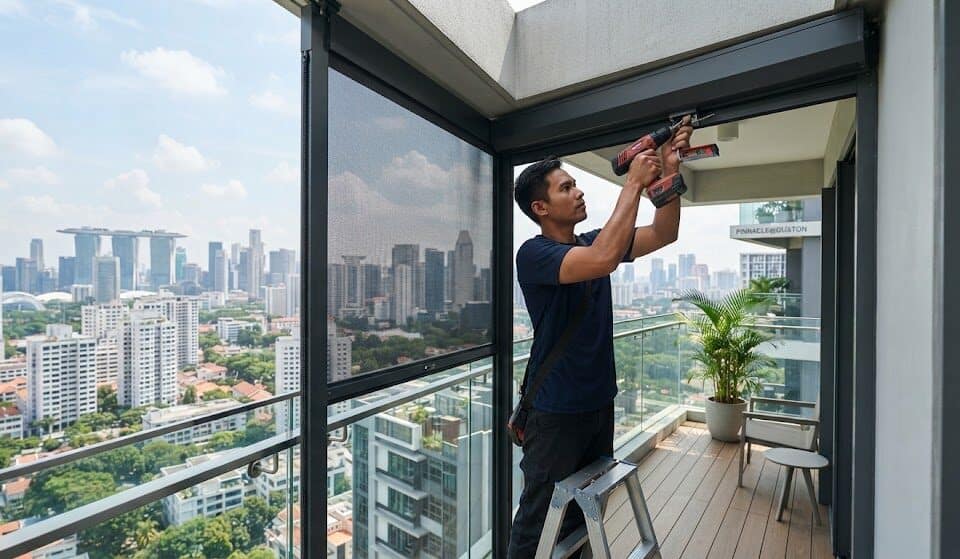
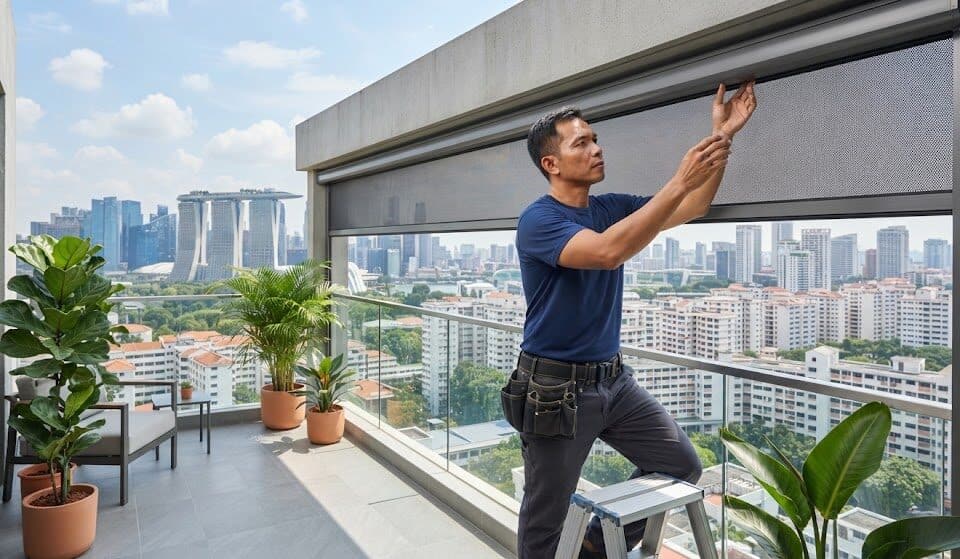
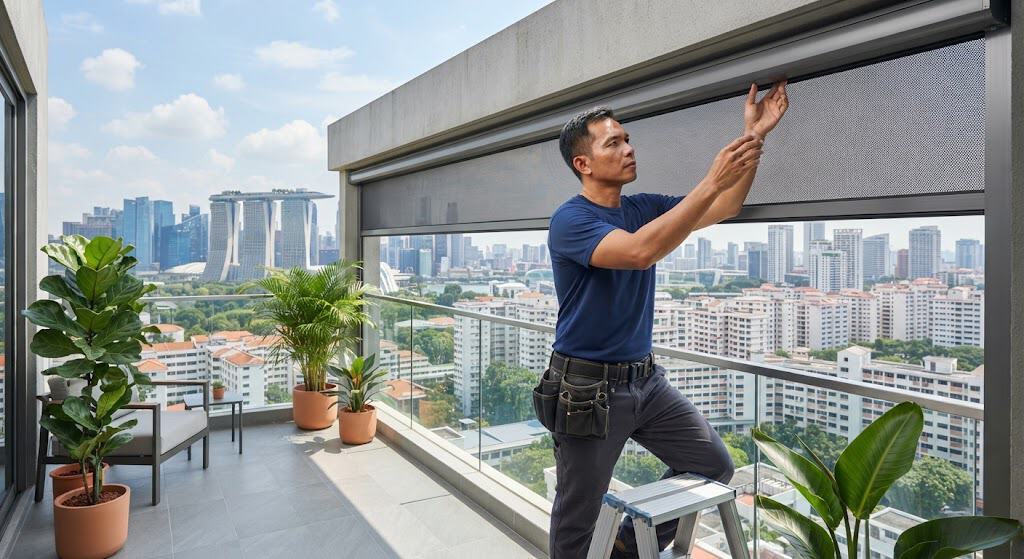
The Winning Material: 100% Solution-Dyed Acrylic Canvas or Perforated Micro-Mesh (1% to 5% Openness Factor). These materials provide essential UV deflection and block driving monsoon rain while maintaining the mandatory 50% natural air permeability required by URA, allowing balcony spaces to stay well-ventilated without trapping hot air.
2. Landed Car Porches & Driveway Shelters
Landed homeowners must weigh the desire for natural daylight against the necessity of keeping cars cool and blocking deafening rainfall noise.
The Winning Material: Dual-Sided Co-Extruded Polycarbonate (for Daylight) OR Insulated Composite Panels (for Thermal Isolation). If your car porch directly fronts your main living room windows and you cannot afford to lose natural indoor lighting, solar-tinted multiwall or solid polycarbonate preserves soft, diffused daylight. If maximum heat rejection, vehicle paintwork protection, and whisper-quiet monsoon acoustic comfort are your primary goals, insulated composite panels deliver superior long-term performance.
3. Commercial F&B Patios & Heritage Shophouses
Commercial outdoor dining areas face heavy public foot traffic and strict life-safety oversight by the Singapore Civil Defence Force (SCDF).
The Winning Material: Flame-Retardant Solution-Dyed Acrylics or Heavy-Duty Composite Vinyls. Commercial awnings must carry accredited laboratory test certifications proving compliance with BS 5867 Part 2 Type B or NFPA 701 flame-propagation standards. Heavy-duty composite vinyls provide 100% waterproof protection over large-span dining footprints, ensuring outdoor tables remain fully bookable rain or shine.
- Verify ISO 811 Hydrostatic Head Water Column: Ensure fabric specifications confirm a minimum water column rating of 1,200mm H2O for residential folding awnings, or > 2,500mm H2O for commercial tension canopies.
- Check Co-Extruded UV Cap Layer Thickness: Polycarbonate sheets must feature a certified dual-sided UV400 co-extruded layer of at least 50 microns to guarantee against yellowing and brittleness.
- Confirm SCDF / BS 476 Fire Propagation Ratings: For commercial and strata-titled properties, confirm that insulated panel cores or canopy fabrics carry Class 1 or Class 0 surface flame-spread ratings.
- Account for Thermal Expansion Allowances: Polycarbonate expands and contracts roughly 3mm per linear meter under Singapore’s diurnal temperature swings. Ensure installers use oversized pre-drilled screw slots and EPDM rubber sealing washers to prevent loud thermal popping noises and stress cracking.
10-Year Polymer Degradation & Colorfastness Lifespan Curve
Comparative structural tensile strength retention (%) and colorfastness under continuous equatorial ultraviolet radiation and high-humidity weathering in Singapore.
Maintenance and Cleaning Chemistry for Advanced Materials
Even the most advanced architectural materials will degrade prematurely if cleaned with improper chemical agents. Singapore’s atmospheric urban dust contains high concentrations of vehicle emissions, sulfur particles, and alkaline cement dust that settle onto outdoor canopies.
Follow these specific chemical maintenance guidelines to protect your material warranties:
1. Cleaning Solution-Dyed Acrylic Fabrics
Never clean solution-dyed acrylics with harsh solvent-based degreasers, ammonia, or concentrated chlorine bleach unless specifically diluted for deep spot removal. High-alkaline chemicals strip away the factory-applied fluoropolymer water-repellent coating. Clean the canvas twice a year using a soft-bristle brush, lukewarm water, and a mild pH-neutral soap (such as diluted dishwashing liquid). Rinse thoroughly with low-pressure garden hose water to ensure no soap residue remains in the weave.
2. Preventing Scratches on Polycarbonate Glazing
Polycarbonate has a softer surface hardness than structural glass. Never use abrasive scouring pads, squeegees with trapped road grit, or petroleum-based glass cleaners containing benzene or alcohol, which trigger chemical micro-crazing on polycarbonate surfaces. Use a soft 100% microfiber wash mitt with abundant water lubrication to float dirt particles away gently before wiping dry.
3. Maintaining Insulated Composite Sandwich Panels
Insulated panels require minimal surface care due to their robust PVDF baked enamel finish. Semi-annual maintenance focuses on clearing fallen leaves and organic debris from the integrated perimeter gutter channels and inspecting the neutral-cure structural silicone joints between panel seams to ensure water-tight seals remain intact.
Frequently Asked Questions Regarding Awning & Canopy Materials
How do I prevent a polycarbonate awning from turning yellow in Singapore’s sun?
Yellowing is caused by solar UV radiation breaking down the polymer chains within unprotected polycarbonate resin. To prevent yellowing, specify high-grade architectural polycarbonate manufactured with a dual-sided co-extruded UV400 protective cap layer (minimum 50 microns thickness). This molecular barrier reflects 99.9% of ultraviolet rays, guaranteeing a 10-to-15-year optical lifespan without discoloration or embrittlement.
Can an insulated composite panel roof support foot traffic for second-storey maintenance?
Yes. Engineered insulated sandwich panels constructed with 0.5mm structural steel or aluminum skins and high-density PIR closed-cell cores (40–45 kg/m³ density) possess high flexural rigidity. When supported by a certified steel subframe, they can safely support maintenance personnel walking on crawl boards or load-distributing staging to clean second-storey windows and air-conditioning condenser units.
How does solution-dyed acrylic canvas prevent black mold in high humidity?
Solution-dyed acrylic is a purely synthetic, non-organic polymer fiber that provides no natural nutritional value for mold or fungal spores. Additionally, the fabric is treated with a factory-applied fungicidal and hydrophobic fluorocarbon coating. Mold only forms if organic road dust, tree pollen, and stagnant rainwater are left trapped inside a rolled-up wet awning. Keeping the fabric clean and allowing it to air-dry prevents mold growth completely.
What is the difference between solid and multiwall polycarbonate for heat reduction?
Solid polycarbonate provides glass-like optical clarity but transmits more conductive heat into the space below (SHGC between 0.40 and 0.70 depending on tint). Multiwall polycarbonate incorporates internal hollow air flutes (twin-wall or honeycomb) that act as natural thermal breaks, reducing heat conductivity while diffusing harsh direct sunlight into an ambient, glare-free glow (SHGC between 0.30 and 0.45).
How do I choose between canvas awnings and polycarbonate roofing for a landed car porch?
Choose a retractable canvas awning if you want flexible, on-demand shade that can be retracted to enjoy open evening skies and natural ventilation, while blocking up to 90% of solar heat during peak afternoons. Choose fixed polycarbonate roofing if you require permanent, 24/7 rain protection that preserves natural daylighting for ground-floor living room windows fronting the driveway.
Make the Right Material Investment for Your Outdoor Space
Selecting the right awning or canopy material is the single most important decision determining your outdoor shelter’s durability, thermal comfort, and acoustic performance. Whether you choose the breathable, elegant flexibility of solution-dyed acrylic canvas, the impact-resistant daylight harvesting of UV400 co-extruded polycarbonate, or the whisper-quiet, total thermal isolation of insulated composite panels, choosing high-performance materials protects your home from Singapore’s harshest climate conditions.
Take the guesswork out of material selection. Partner with certified outdoor shading specialists who provide physical material sample evaluations, thermal load calculations, and precision structural installations. Schedule an on-site consultation today to review material swatches, evaluate your property’s solar orientation, and engineer an outdoor awning solution tailored to your exact architectural needs.